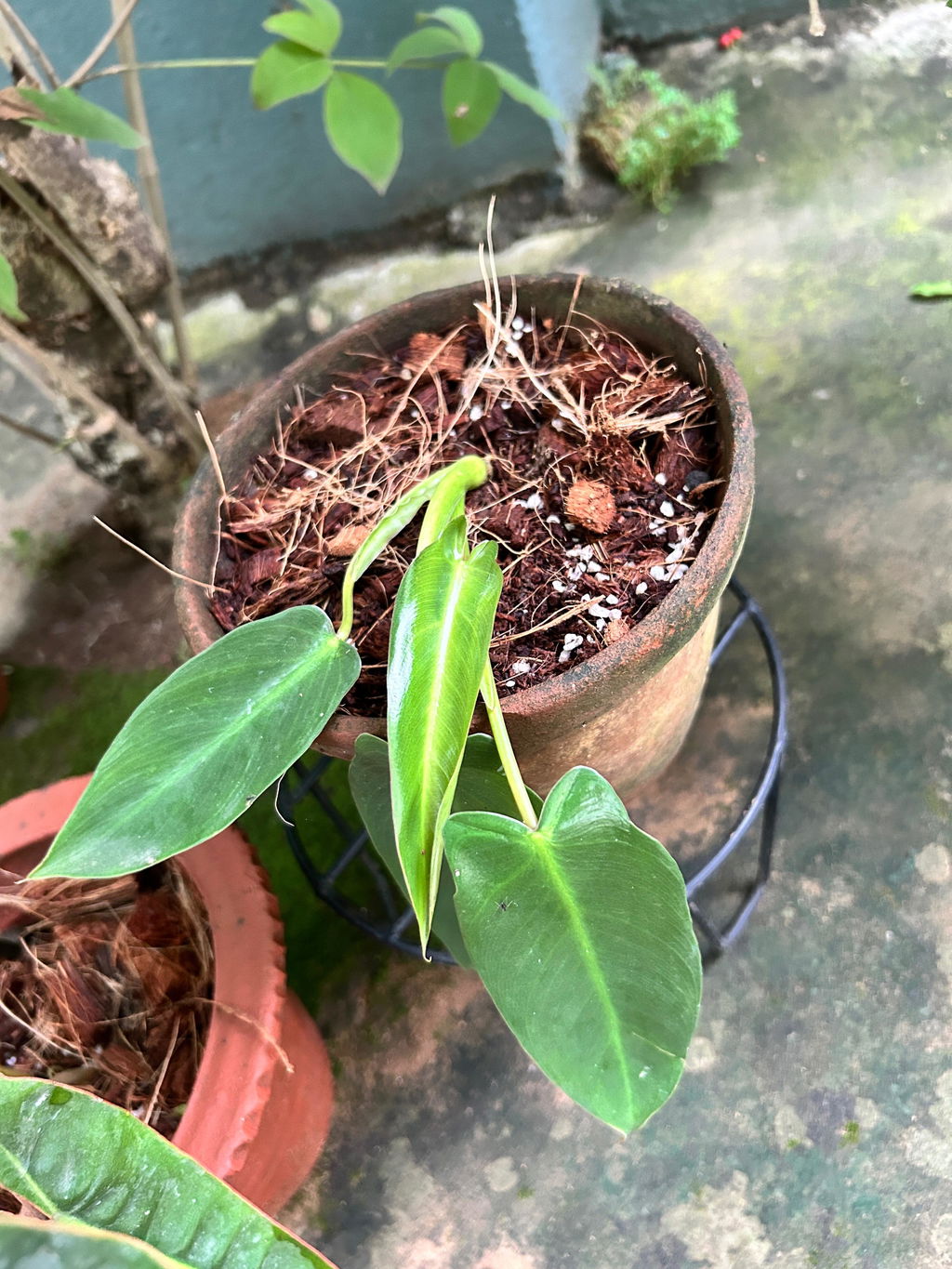
The Philodendron Spiritus Sancti is widely revered as the undisputed "Holy Grail" of the aroid kingdom. Native to an extraordinarily narrow, endangered pocket of the Atlantic rainforest in Espírito Santo, Brazil, this legendary species represents the absolute pinnacle of botanical rarity, prestige, and timeless elegance.
The visual signature of a maturing Spiritus Sancti is unmistakable. Each dramatic leaf blade emerges with soft bronze-green tones before hardening into an immense, leathery pendant sword. The elongated, strap-like foliage cascades downward with graceful authority, framed by distinctive rounded upper ear lobes and elegant central venation.
Iconic Pendant "Sword" Blade Architecture
The defining characteristic of Spiritus Sancti is its dramatically elongated, ribbon-like leaf structure. Mature blades stretch into slender cascading spears with distinctive upper sinus lobes, creating a regal silhouette unlike any other Philodendron in existence.
Climbing Epiphyte & Enormous Scale
Naturally an epiphytic climber, providing this rarity with a sturdy moss pole, cedar plank, or trellis allows its aerial roots to anchor securely. Vertical growth fuels dramatic leaf elongation, helping it develop massive cascading foliage as it scales upward.
Caution: Toxic to Pets
Like all premium members of the Philodendron genus, Spiritus Sancti contains insoluble calcium oxalate crystals. Chewing or ingesting any part of the leaves or stems will cause immediate oral burning, swelling, and sharp digestive discomfort in dogs and cats. Keep it safely elevated out of reach.
Light
▾
Requires consistent, bright indirect filtered light. Ample ambient lighting is essential to fuel steady growth, encourage compact internode spacing, and drive impressive leaf elongation. Protect it strictly from direct afternoon solar rays to prevent scorching the thick leathery blades.
Watering
▾
Allow the top 40% to 50% of the soil mixture to dry out fully before providing a thorough, deep drench. Its thick, fleshy roots demand high oxygen levels and will deteriorate quickly in saturated, waterlogged potting media. Always ensure your planter drains freely and completely.
Soil & Humidity
▾
Thrives best in elevated humidity environments (65% or higher) to keep the elongated leaf tips pristine and prevent emergent leaves from getting caught during unfurling. Always pot it in an ultra-open, chunky aroid substrate combining coarse orchid bark, perlite, horticultural charcoal, tree fern fiber, and coco chips.